
16 Nov 2026
When Gods Dance in Fire - Traditional Art, and Temple Culture in Kerala, India
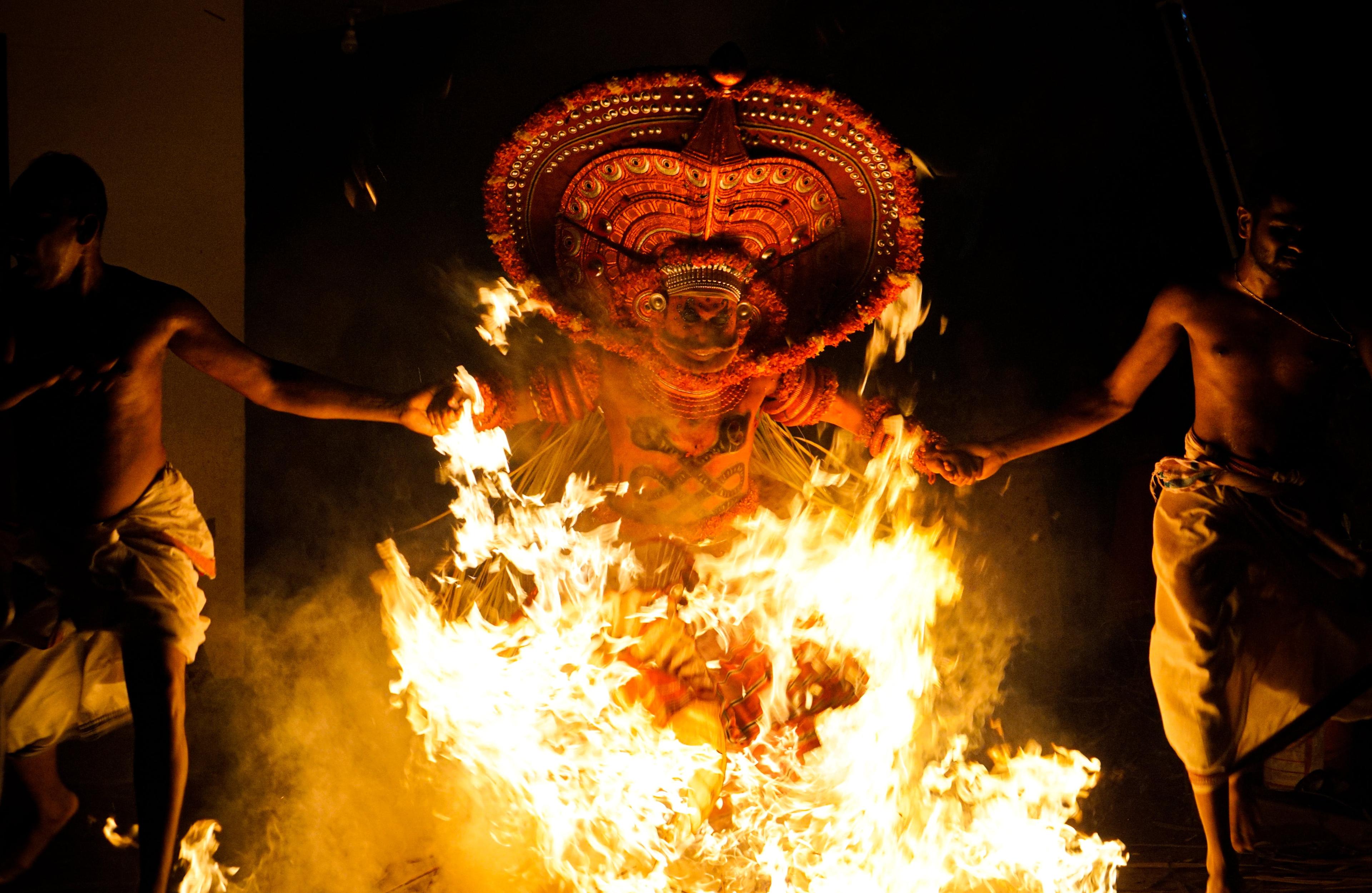
There’s a side of Kerala that doesn’t really show up in the usual travel brochures.
Beyond the backwaters, beaches and hill stations, there are villages in North Kerala where, on certain nights, the atmosphere completely changes.
The drums begin. People gather around the temple grounds. A performer slowly transforms with elaborate makeup, towering Mudi and traditional ornaments.
And then Theyyam begins.
Watching Theyyam for the first time can be difficult to describe. The fire, the drums, the chanting, the costumes and the sheer energy of the performance make it feel almost surreal.
But what makes it special is that Theyyam isn't a performance created for tourists. It's a living ritual and a deeply rooted part of local faith and culture.
If you're someone who enjoys travelling beyond the famous sightseeing spots, I genuinely think this is something worth experiencing.
When should you go? The main Theyyam season generally runs from November to April, although the exact dates and performances vary from temple to temple.
If you're interested in Kerala's larger temple celebrations, April–May is also a fascinating time, especially around Thrissur Pooram, with huge percussion ensembles, decorated elephants and an incredible festive atmosphere.
And if food and local celebrations are your thing, August–September brings Onam — Pookalam, traditional Sadya, games and celebrations across Kerala.
Where should you go? Kannur & Kasaragod are the places I'd look at first if Theyyam is the main reason for your trip. Instead of looking for a staged tourist show, try to experience it at a local Kaavu or temple where the ritual actually takes place.
Thrissur is another completely different cultural experience. The city is deeply connected with Kerala's temple traditions and is home to the historic Vadakkunnathan Temple.
And in the south, Thiruvananthapuram offers another side of Kerala's spiritual heritage, especially around the magnificent Sree Padmanabhaswamy Temple.
One thing I'd strongly recommend, though: don't try to rush through these places just to tick them off a list.
Theyyam performances can happen late at night or even continue into the early morning. The best experiences often come from knowing where and when a particular ritual is happening and having someone local help you understand what you're actually witnessing.
And please remember — these aren't tourist shows.
Dress respectfully, follow the temple or shrine's rules, keep an appropriate distance and always ask before taking photographs, particularly during the more sacred parts of the ritual.
For me, this is what makes travelling through Kerala so interesting.
You don't always have to go somewhere famous to find something unforgettable. Sometimes it's a small village, a temple courtyard, the sound of drums at midnight and a tradition that has been passed down for generations.
That's the Kerala I love exploring.
Have you ever witnessed Theyyam or another traditional ritual in Kerala? I'd love to hear about your experience.